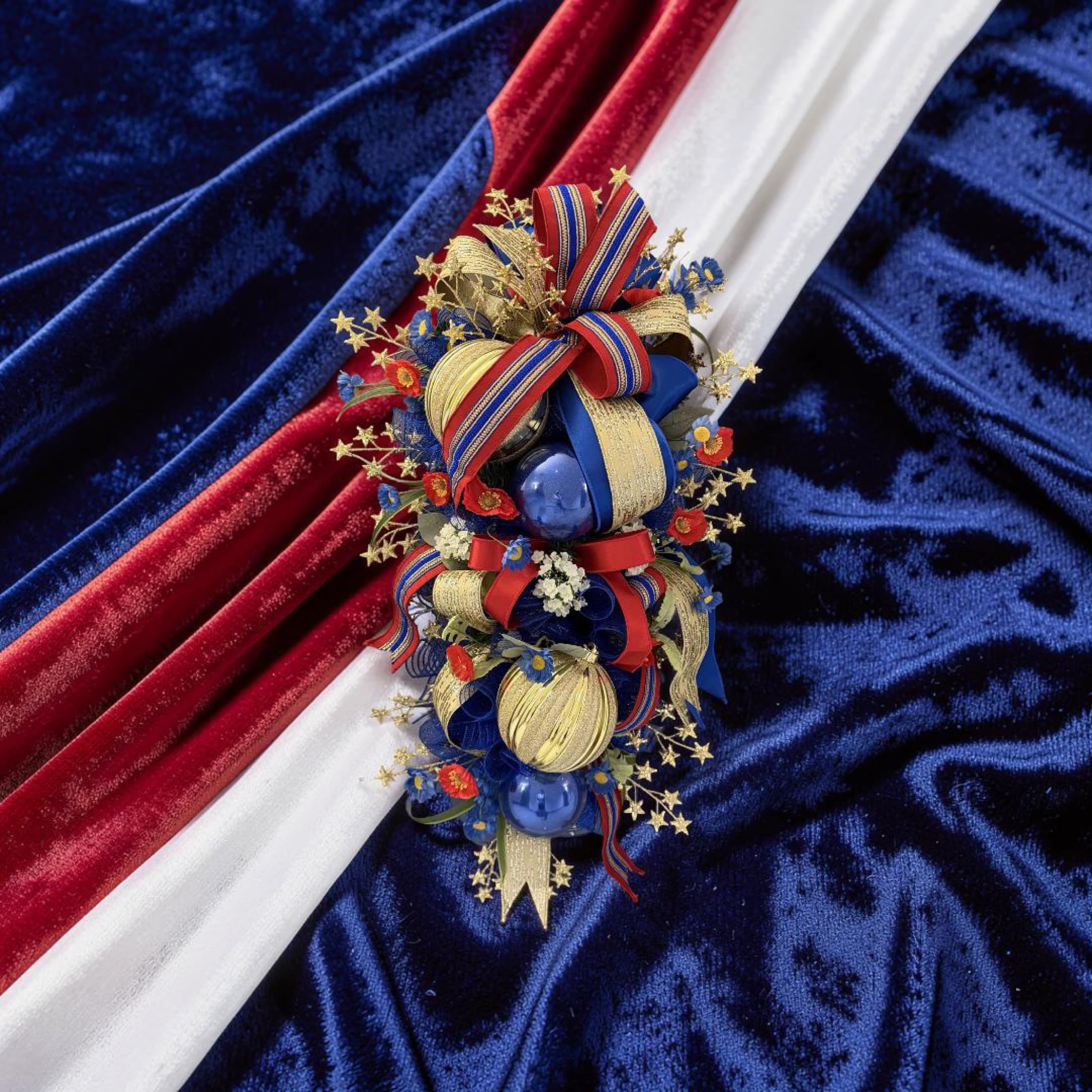
A custom swag looks simple only after the hard decisions have been made.
The finished piece needs to hold shape, frame the space, and feel intentional from several distances. Up close, the ribbon and texture matter. From the street or across the room, the silhouette and scale matter more.
Start With the Placement
A front door swag is not built the same way as a mantel, table, or interior entry moment.
The width of the door, the color behind it, the hardware, the viewing distance, and the surrounding architecture all change the right proportions. A swag that is too small can disappear. One that is too heavy can feel forced.
Build the Shape Before the Detail
The structure comes first: greenery, branches, wire, and the directional line. The ribbon should support that movement instead of sitting on top like an afterthought.
Good ribbon work has shape. It needs volume, bends, tails, and tension so the piece looks styled instead of flattened.
Layer Color With Restraint
Swags can carry a bold palette, but the color still needs discipline. Repeating two or three strong tones usually feels more polished than adding every seasonal accent at once.
The goal is not simply to make something festive. The goal is to make the first impression feel designed.
Installation Is Part of the Design
Weight, attachment points, weather exposure, and surface protection all matter. A beautiful swag that does not sit correctly will not feel luxurious for long.
That is why many clients prefer to hand the work to a holiday stylist. The visible detail is only one part of the job. The real value is knowing how to make the whole piece feel secure, scaled, and finished.
A custom swag is also a strong choice when a home needs holiday impact without another full tree. It can make a door, mantel, mirror, stair rail, or entry table feel designed from the first glance.
See how Season & Sparkle approaches custom holiday swags, or request a consultation to talk through the place in your home that needs a statement.